Bell peppers come in a variety of colors, with each color being sold at a different price point. The most common bell pepper colors are green, red, orange, and yellow. Green bell peppers are the least expensive of the bunch, and red bell peppers tend to be the most expensive. Yellow and orange bell peppers fall somewhere in the middle (but can cost as much or more than red at times). They all have the same basic shape and a similar flavor, but is there more to the difference? The answer is yes, a lot more.

Why do bell peppers come in different colors?
In some cases, bell peppers differ in color based on their degree of ripeness, which has to do with how long the peppers have spent maturing on the plant. In other words, color can represent a particular stage of ripeness. This is most typically seen in green bell peppers aging on the vine to their mature red form (and often the multiple hues created in the transition).
In other cases, it’s the variety of the bell pepper that’s in play. Some bell pepper types age from green to yellow or orange in maturity. Others can stay green their entire time on the vine.
So bell pepper color is not all about fruit maturity and it’s not all about type. It’s a mix of both together that makes the fun hues of this plant.
Does color impact the nutritional value of bell peppers?
It can, when you consider an unripened (green) vs. a fully ripe (red) pepper. Green bell peppers typically offer the lowest nutritional value because they’ve spent less time on the vine. It’s also part of why green bell peppers cost less than other color options. Because they are harvested and shipped off at an immature stage, less work is involved in caring for them. That said, green bell peppers are still very nutritious and contain large amounts of vitamin C.
Red bell peppers (or other fully ripened colors) have spent the most time on the vine. Their nutritional value is considerably more than that of the green bell pepper; they can have twice as much vitamin C as green bell peppers and more than 10 times the vitamin A. The premium price is mainly the result of the time spent on the pepper plant and the extra care that they require before harvest.
Does each bell pepper color have a different taste?
As with most edible fruit, the taste of a bell pepper changes significantly depending on its stage of ripeness. Green bell peppers have a more grassy, bright, and slightly bitter flavor compared to mature pepper colors. The flavor changes as the pepper grows riper. Red bell peppers (and other colors of a fully matured bell) will typically be sweeter and significantly less bitter in flavor.
What about purple, white, and brown bell peppers?
The rarer colors follow the same two rules. Purple and white bells are varieties whose immature stage happens to be purple or white instead of green, and most of them head toward red if they stay on the plant long enough. Brown (sometimes sold as “chocolate”) bells run the other way: that deep color is the fully ripe stage of certain varieties, not a stop along the road to something else.
They mostly eat like the stage they are at. Purple and white bells are closer to a green pepper: crisp, grassy, a little bitter. A chocolate bell eats like a red one, sweet and fully ripened. So the two-factor rule above tells you what to expect from a color you have never cooked with before.
Can a green bell pepper ripen after picking?
Do not count on it. Bell peppers do nearly all of their ripening on the plant, so a fully green pepper picked green mostly stays green in your kitchen. It will soften and wrinkle long before it turns red. This is not a banana situation, where a few days on the counter finishes the job.
The exception is a pepper that was already turning when it was picked. One with streaks of red or orange can deepen a little over a few days at room temperature, but it is finishing a change it already started rather than starting one, and the flavor tends not to fully catch up to a pepper that ripened on the plant. If you want red, buy red.
Which color should you cook with?
It depends on what the pepper is doing in the dish. That grassy, slightly bitter edge green bells carry is an asset in savory cooking. Fajitas, stir-fries, sausage and peppers, stuffed peppers: these all work with green partly because sweet would sit oddly in them. The ripe colors are for when sweetness is the point, so raw snacking, salads, and roasting, where a red bell turns silky and even sweeter.
Given the prices, that is also permission to buy green without feeling like you are settling; for plenty of dishes it is the better pepper, not the cheaper one. If a recipe calls for a color you do not have, it is rarely a dealbreaker, and our bell pepper substitute guide covers the swaps. And if what you want is green’s savory character with more personality behind it, that is the case for a poblano. Our poblano vs. bell pepper comparison lays out that trade.
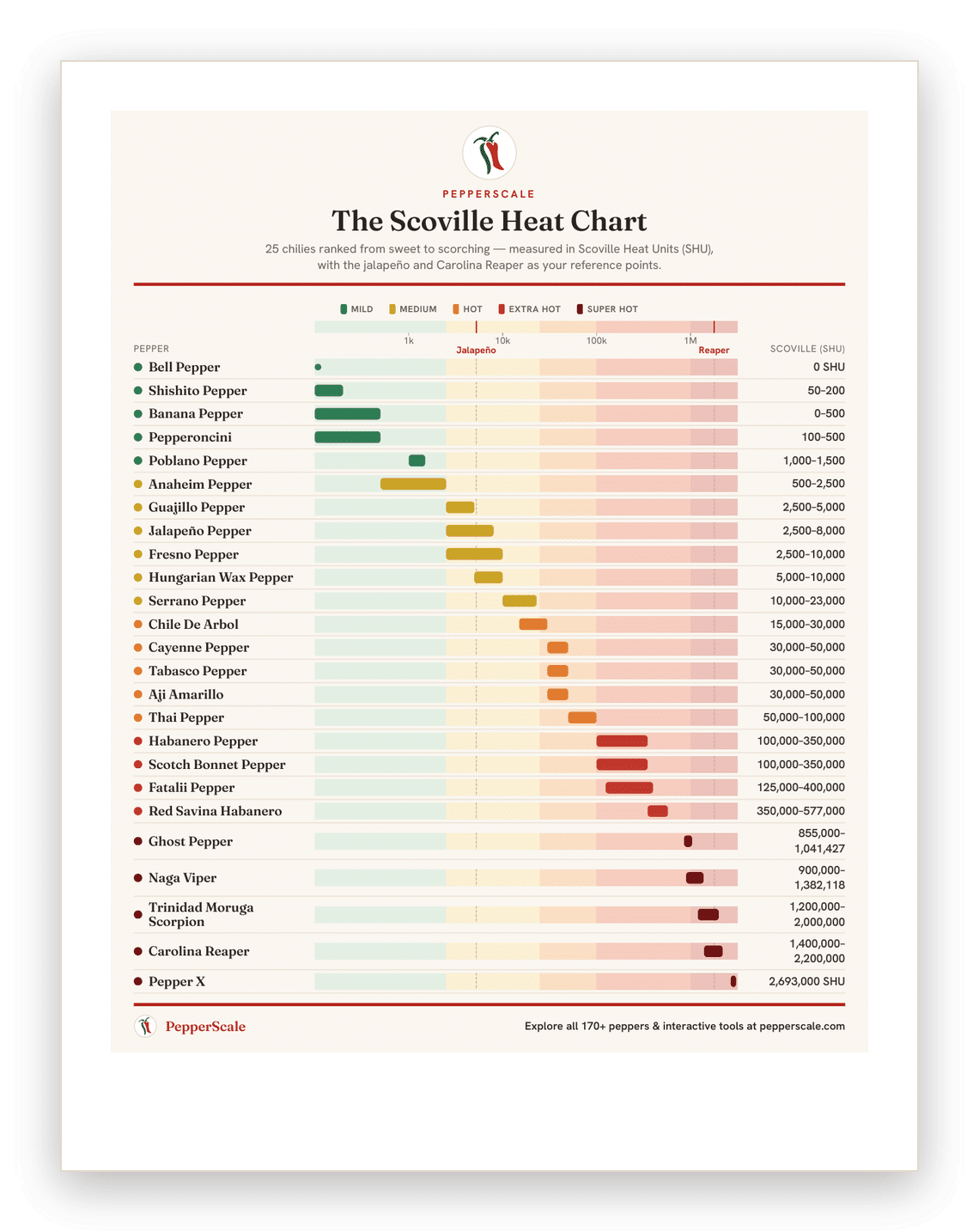
Get the free PepperScale Scoville Heat Chart
A printable, at-a-glance ranking of 25 chilies from sweet to scorching — with the jalapeño and Carolina Reaper as your reference points. Join the newsletter and we’ll send it straight to your inbox.
No spam — just Wicked Wednesday recipes and occasional extra dashes of chili pepper inspiration. Unsubscribe anytime.
Related reading
- Male And Female Peppers: Learn the fact and fiction behind whether peppers have genders.
- Jalapeños Not Spicy? We cover the reasons why that may be.
- Craving Spicy Food? We dive into what makes us want it (and why.)
I wonder why some seed packets you buy say they are red peppers and some say green? False advertising?
Something I have always wondered. What a fascinating and informative post.