If chili peppers have a home base, it’s the jalapeño. It’s the one nearly everyone has tasted, the one every other chili quietly gets measured against — so much so that we describe heat across PepperScale in jalapeños. But set the heat aside for a moment, because flavor is where this pepper earns its keep. Bite into a fresh green one and you get a bright, grassy snap with a faint vegetal bitterness and a clean green finish. That green voice is the loudest note in what we call the Green & Grassy group (Group A) in The Capsaicin Code, the family of peppers that taste of cut grass, raw beans, and fresh garden air.
Grown in and named for Xalapa, Veracruz, the jalapeño is a medium, pod-shaped chili (2 to 3½ inches, with walls thick enough to stuff) that turns from green to red as it ripens. It’s a staple of Mexican and Tex-Mex cooking and shows up everywhere from Thai stir-fries to Spanish tapas. Here’s everything worth knowing about it.
Last update on 2026-10-02. We earn a commission if you make a purchase, at no additional cost to you.

- Species
- C. annuum
- Origin
- Mexico
- Uses
- Culinary
- Closest swap
- Fresno
8 more comparisons
vs Bananaheat swap~21× mildervs Pepperonciniheat swap~18× mildervs Poblanoheat swap~4× mildervs Cayenneflavor change → Sharp~7.6× hottervs Habaneroflavor change → Fruity~43× hottervs Scotch Bonnetflavor change → Fruity~43× hottervs Ghostflavor change → Fruity~181× hottervs Carolina Reaperflavor change → Fruity~343× hotterHow hot is a jalapeño, really?
The card above puts the numbers in perspective, so here’s the human version: the jalapeño is the perfect amount of heat for people who want a real kick without picking a fight with their taste buds. At 2,500 to 8,000 Scoville heat units, it’s a low-to-medium warmth, the pepper that taught most of the world it likes a little fire.
That range is wide, though, and it matters in the kitchen. At the bottom end a jalapeño borders on mild; at the top it can rival a gentle serrano chili. Two pods from the same plant can land in different places, which is why the single smartest habit you can build is to taste a sliver before you cook. It’s not always pleasant, but it tells you exactly how much to use.
What a jalapeño actually tastes like
Lead with the flavor and the jalapeño splits neatly into three characters:
Green (picked young). Bright, grassy, and vegetal, with a faint bitterness and a crisp snap. This is the classic jalapeño flavor, the one you want in a fresh salsa, a pico de gallo, or on a taco.
Red (fully ripened). Left on the vine, a jalapeño sweetens, rounds out, and sheds most of its bitter edge, gaining a little heat along the way. Same 2,500–8,000 SHU range, but a mellower, fruitier read. If a recipe leans on sweetness, red is your pod.
Charred or cooked. Heat transforms this pepper. Blister or roast a jalapeño and the grassy green notes brown into something smoky, sweeter, and almost meaty. It’s the same reason a roasted poblano tastes nothing like a raw one. Take that all the way and you reach the jalapeño’s most dramatic act: smoke and dry a ripe red one and you’ve made a chipotle — a different ingredient entirely, all raisin, tobacco, and wood.
How to pair a jalapeño
Most pairing lists tell you an ingredient “balances the heat” and leave it there. The jalapeño deserves better, so here’s how its partners actually work, sorted the way we sort every pairing in The Capsaicin Code: by what the two ingredients are doing to each other.
Congruence: partners that share its green, bright voice
Congruence is when two ingredients share a flavor character and reinforce it. The result tastes deeper and more unified, not like two separate things. The jalapeño’s green, citrus-edged brightness has plenty of natural echoes:
- Cilantro is the flagship. It carries the same fresh, green, faintly citrusy top note, so the two don’t just coexist in a salsa; they amplify each other into one louder garden-fresh flavor.
- Tomatillo, lime zest, and raw onion all share that bright green register and pull in the same direction.
- Sweet corn brings a green-sweet note that sits right alongside the pepper (and, as you’ll see, does double duty as synergy).
- Garlic and cumin anchor the savory, earthy foundation these bright flavors build on, the backbone of countless Mexican and Tex-Mex dishes.
Contrast: fat and acid that manage the heat
Contrast manages the pepper by difference. Two kinds matter here, and it’s worth knowing why each works:
- Fat is the jalapeño’s best friend: cheese, avocado, crema, sour cream. Fat dissolves capsaicin and wraps the heat into something manageable while carrying the pepper’s oil-loving aromatics across your palate. It doesn’t cancel the spice; it tames and spreads it. (Same reason a glass of milk beats a glass of water on a burn: capsaicin is oil-soluble, so water just moves it around.) This is the whole logic behind jalapeño poppers, nachos, and a jalapeño popper grilled cheese.
- Acid, like a squeeze of lime or a splash of vinegar, works differently. It doesn’t remove heat; it gives your brain a brighter signal to chase, so the burn has to share the stage. Tomato brings both at once: acid plus a gentle sweetness that softens any green bitterness, which is why it’s a salsa cornerstone.
Synergy: sweet and heat that make something new
Synergy is the fun one: a combination that produces a flavor neither ingredient had alone. Pair a jalapeño with ripe fruit and one plus one becomes three: the fruit’s sweetness rounds off the pepper’s bitter edge, while the pepper’s warmth wakes the tongue and makes the fruit taste brighter and more vivid.
- Strawberry, mango, and pineapple are the standouts. The heat doesn’t fight the fruit; it lifts it. It’s the entire idea behind mango jalapeño salsa and the sweet-hot magic of cowboy candy.
- Corn lands here too: its sugar and the pepper’s warmth spark against each other in salsas, salads, and cornbread.
- Reach for a red jalapeño when you’re leaning into these: its extra sweetness makes the synergy even louder.
One pairing to skip
Heavy smoke and deep dried-chili flavors will bulldoze a fresh green jalapeño’s bright character, and you lose exactly what you came for. The exception proves the rule: turn that jalapeño into a chipotle first, and smoke stops being a bully and becomes the whole point.

Cooking with jalapeños
This is one of the easiest chilies to cook with: easy to find, easy to handle, forgiving in a pan. A few things get the most out of it:
Control the heat with the seeds and membrane. Most of a jalapeño’s capsaicin lives in the pale inner membrane (the placenta), not the seeds themselves. Leave it in for a hotter dish; scrape it out for a gentler one. And check the skin: fine cracks called corking often signal a more mature, hotter pod.
Handle with a little care. You can work with whole jalapeños bare-handed, but glove up once you start cutting, because the capsaicin can leave your fingers burning, and jalapeño in the eye is no fun at all. Keep dairy or oil (not water) nearby to treat chili burn if it finds you.
Char it when you want depth. Blistering under a broiler or over a flame is the single best trick for turning a workaday jalapeño smoky and sweet, a small technique change that rewrites the flavor.
Green, red, and the many jalapeño varieties
Whether you cook with green or red comes down to the flavor you want: bright and grassy versus sweet and round (here’s the full green-vs-red breakdown). Beyond ripeness, there are dozens of cultivars. Three of the most useful:
- Mammoth jalapeño: up to 5 inches, bred for size; roomy for stuffing, and usually milder for its trouble.
- Purple jalapeño: a culinary chili striking enough to double as edible landscaping.
- Chipotle: the smoked, dried red jalapeño, a Tex-Mex and BBQ workhorse and, as above, a genuinely different ingredient.
For the full field guide, see our jalapeño varieties guide, which covers fifteen common types grouped by heat.
The best jalapeño substitute
Reach for a serrano. It sits in the same Green & Grassy family, so you keep the bright, grassy character that makes a jalapeño a jalapeño, just sharper and a step or several up in heat (10,000 to 23,000 SHU). Because it’s a same-family swap, it slots into most recipes without changing the flavor direction, only the intensity. For milder or more situational options, see the best jalapeño substitutes.
Our favorite jalapeño recipes
Put the pairing logic to work:
- Stuffed jalapeños with bacon: the classic fat-meets-heat contrast, in appetizer form.
- Cowboy candy (candied jalapeños): pure sweet-hot synergy; excellent with fruit or straight off the fork.
- Jalapeño popper grilled cheese: contrast again, all that fat wrapping the heat.
- Mango jalapeño salsa: synergy in a bowl, great over pork or chicken.
- Jalapeño popper mashed potatoes: perhaps the best side fried chicken has ever met.
- Bacon-wrapped jalapeño pigs in a blanket: as good as they sound, and low-carb to boot.
- Jalapeño fried chicken: the chili works the brine and the breading for real fire.
The bottom line
The jalapeño gets treated as a heat delivery device, but that sells it short. It’s the benchmark for a reason: a bright, grassy, endlessly cookable pepper that plays well with fat, sharpens with acid, and turns downright magical next to ripe fruit — and, with a little smoke, transforms into something else entirely.
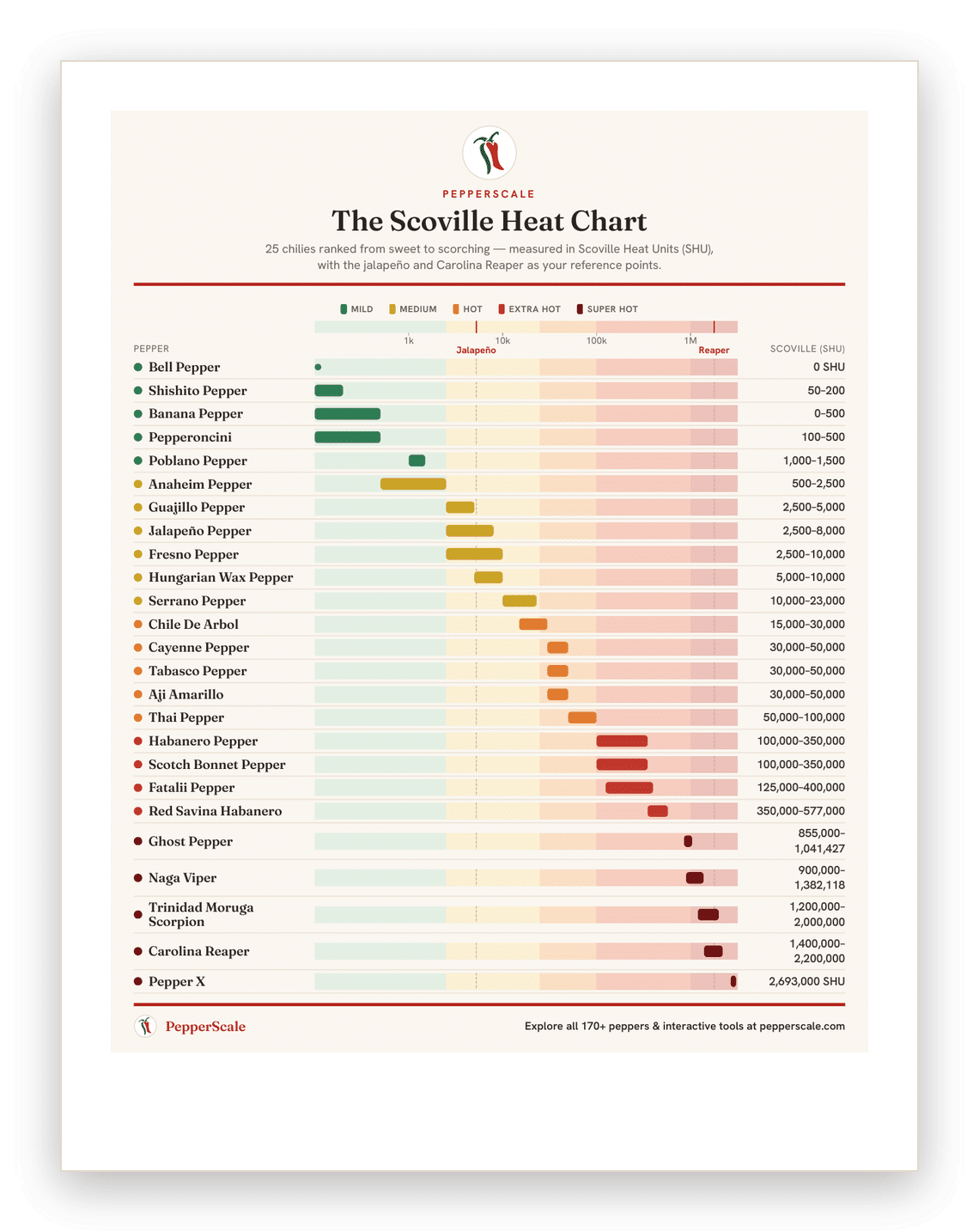
Get the free PepperScale Scoville Heat Chart
A printable, at-a-glance ranking of 25 chilies from sweet to scorching — with the jalapeño and Carolina Reaper as your reference points. Join the newsletter and we’ll send it straight to your inbox.
No spam — just Wicked Wednesday recipes and occasional extra dashes of chili pepper inspiration. Unsubscribe anytime.
Related reading
- The Jalapeño Planting Guide: Everything you need to grow your own, from starting seeds indoors to the sun-stress trick that coaxes hotter pods out of the plant.
- What Is the Scoville Scale?: The story behind the heat numbers, and how a 1912 pharmacist’s sugar-water taste test still ranks every pepper on the site.
- Pickled Jalapeños: A quick refrigerator pickle that turns an end-of-season glut of pods into the tangy, crunchy rings you’ll want on everything.
In my perception, the US jalapeño is heater than Mexican jalapeño. That’s the reason why people from US are aware of eating jalapeño in México, but is not the same. I had tried in México and in US and I prefer US, because I love spicy food.
When I lived in New Mexico my co-workers used to grow some great Jalapeño’s, Birds Eyes, and Anaheim type Peppers on there ranches. There is nothing like fresh picked then oven roasted chiles with egg’s, hand made flat bread and home fries for breakfast. 😉