Pepper seeds are safe to eat, and they aren’t what makes a dish too hot. That’s the pale membrane they’re attached to, not the seeds themselves. Seeds get blamed for both anyway, which is a bad reputation they never earned. There are still good reasons to pull them out of some dishes, though, and a few other questions about seeds worth clearing up.

Is it safe to eat pepper seeds? Or should you remove them before eating?
In other words, are pepper seeds toxic? No, pepper seeds are not toxic but you may still want to remove them before eating. Pepper seeds are slightly bitter, but not so bitter that they will ruin a dish in most cases. However, you may want to remove them if you are using a large number of peppers. A lot of seeds may have an unpleasant effect on the taste of the dish. Aside from the bitterness issue, pepper seeds don’t really add anything to a dish so most cooks take them out.
Something that you should consider is the mouthfeel. Aside from the flavor and toxicity angle, it may be annoying to have small, hard bits in a dish. That’s especially true if that dish should have a smooth mouthfeel. You may want to take them out for improved texture. You can either take them out when getting your peppers ready to cook or strain them out of the finished dish in the case of a soup or sauce.
Does keeping pepper seeds in a chili make the dish hotter?
Pepper seeds on their own won’t make your chili hotter but you might not know that if all your cookbooks are older. The reason is that for a long time, people were convinced that the seeds were the source of the hot pepper’s heat. They believed that the seed kernel held the highest concentration of capsaicin. Many older recipes advised cooks to remove seeds to lower hot pepper heat.
The idea that pepper seeds are full of capsaicin has long been debunked. Pepper seeds do contain a little capsaicin and can deliver a small spark as you can tell if you chew one separate from the pepper itself, but the heat level is low. Instead, the capsaicin is concentrated in the pale membrane (also called the pith) that connects the seeds to the walls of the pepper. If you want to lessen the heat of your chili, you should — while wearing gloves or using a pepper corer — cut the whitish membrane out of the pepper and discard it. Use only the colored walls of the pepper pod.
Even when preparing mild peppers like bell peppers, you should consider removing the membrane as it can be bitter and has a cottony texture. It’s a flavor and mouthfeel that some dislike.

Last update on 2026-09-04. We earn a commission if you make a purchase, at no additional cost to you.
How do you get the seeds and the membrane out?
The membrane is the part worth the trouble, and it comes out in one piece more often than people expect. Cut the pepper in half lengthwise, and the pale ribs running down the inside will lift away with a thumb or the tip of a teaspoon, bringing most of the seeds with them. A pepper corer does the same job through the stem end without halving the pod, which is the better route if you want the pepper whole for stuffing.
Wear gloves for anything hotter than a jalapeño, and keep your hands away from your eyes for a good while afterward. Capsaicin does not wash off with water alone, so a rinse at the sink is not the safeguard it feels like. If it does get you, our guide to chili burn covers what actually helps.
For a soup or a sauce there is a lazier option that works just as well: leave everything in while it cooks and pass the finished thing through a sieve. You lose nothing but the bits you did not want, and it saves fiddling with a dozen small peppers.
Do pepper seeds provide any benefits?
There is not a lot of information on the nutritional value of pepper seeds, but there is at least one study on capsicum annuum seeds (of which bell pepper seeds are one) stating that their byproducts are good sources of fiber and protein. Another study on pepper seed byproducts found that pepper seed oil is rich in linoleic acid and the pepper seed meal is a good source of both fiber and protein. But eating a few pepper seeds on their own likely won’t provide a lot of nutritional value.
Why do some hot sauces (and other chili products) keep the pepper seeds?
Some products like sambal oelek and crushed red pepper flakes contain the seeds, but this is mostly for enhancing the condiment’s appearance. It gives the spicy pepper product the appearance of garden freshness (or being freshly ground.) There are no benefits to the flavor of these products.
Can you plant the seeds from a pepper you bought?
Sometimes, and it is a bigger gamble than it looks. Seeds only stand a chance if they came from a pod that ripened fully on the plant, so the green jalapeño from the supermarket is unlikely to give you anything. Even a fully red one is often a hybrid, which means the seeds may grow into something that does not much resemble the pepper you took them from.
If you want to try anyway, dry the seeds thoroughly and keep them somewhere cool and dark. How long pepper seeds stay viable is its own question, and we have covered it separately.
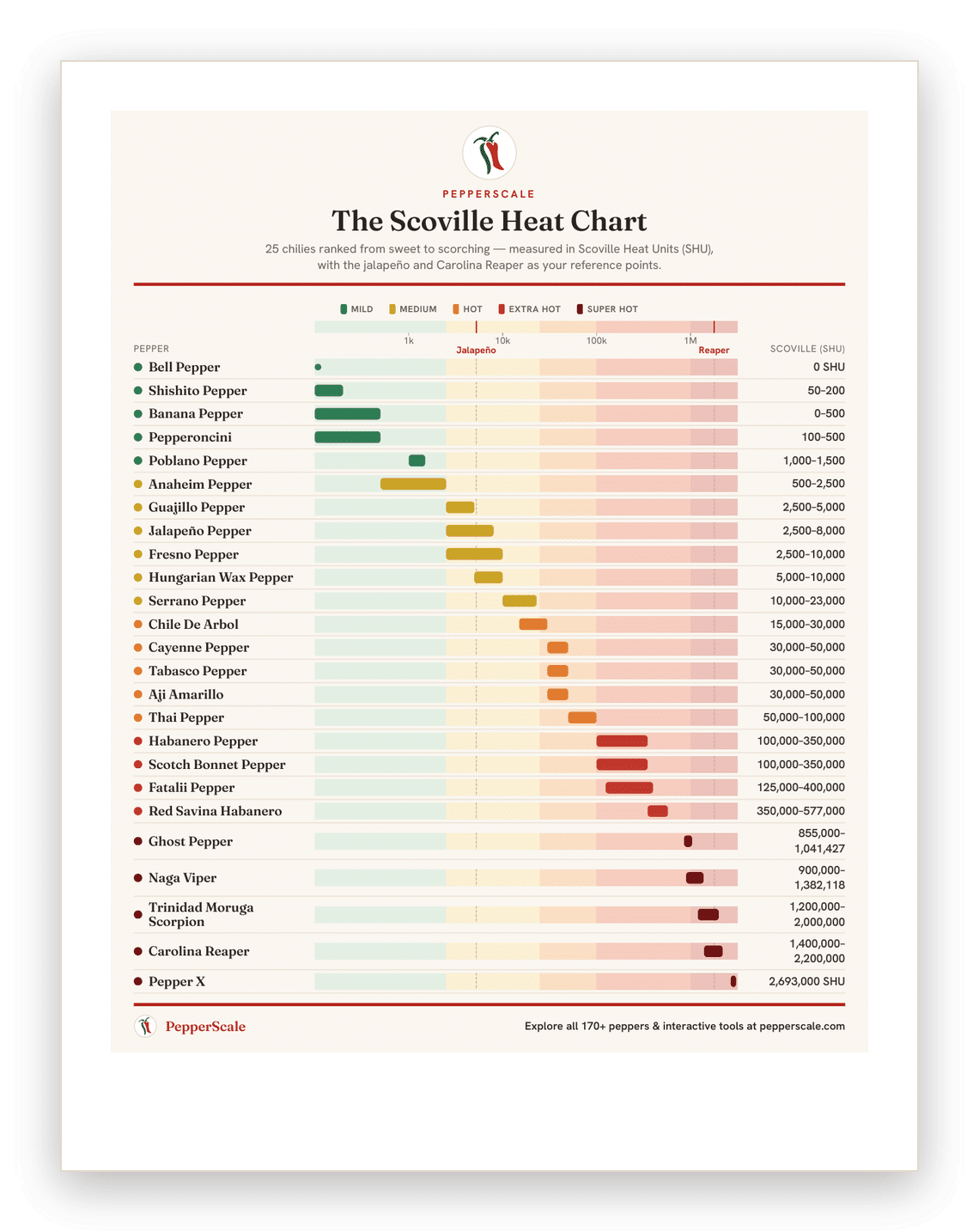
Get the free PepperScale Scoville Heat Chart
A printable, at-a-glance ranking of 25 chilies from sweet to scorching — with the jalapeño and Carolina Reaper as your reference points. Join the newsletter and we’ll send it straight to your inbox.
No spam — just Wicked Wednesday recipes and occasional extra dashes of chili pepper inspiration. Unsubscribe anytime.
Must-read related posts
- How Long Do Pepper Seeds Last? If you’re keeping the seeds for planting, what can you expect as a shelf life for viability?
- Do Peppers Have A Gender? Some believe there are male and female peppers. Is that true?
- Why Are Bell Peppers Different Colors? What’s behind the rainbow of hues that you see at stores?