Yes, hoisin sauce goes bad, but it takes its time. USDA’s FoodKeeper puts an unopened jar at 18 to 24 months in the pantry and an opened one at 3 to 6 months in the fridge. The brands are stricter about flavor than that, and mold can grow on hoisin even in the fridge. Below is how long it lasts, where to keep it, and how to tell when a jar is done.


Last update on 2026-11-02. We earn a commission if you make a purchase, at no additional cost to you.
How long does hoisin sauce last?
It depends on whether the jar is open and whose advice you follow, so here is what USDA’s FoodKeeper and two of the big hoisin brands say.
| Hoisin sauce | How long | Source |
|---|---|---|
| Unopened, in the pantry | 18 to 24 months from purchase | USDA FoodKeeper |
| Opened, in the fridge | 3 to 6 months | USDA FoodKeeper |
| Opened Kikkoman sauces, in the fridge | Within 1 month for the best quality | Kikkoman |
| Opened Lee Kum Kee hoisin, in the fridge | Within 2 weeks | Lee Kum Kee label sold in the UK |
Why the spread? The brand numbers are about flavor. Kikkoman says a month “for the best quality,” so a jar that has been open for two months may simply have lost some of its punch. If you only use hoisin once in a while, a smaller jar is the better buy.
Does hoisin sauce need to be refrigerated after opening?
Yes. Lee Kum Kee’s spec sheet for its gluten-free hoisin says to store it in a cool, dry place and refrigerate after opening. Kikkoman says its sauces should go in the fridge once they are open. Unopened jars are fine in the pantry.
Soy sauce is a different story. FoodKeeper says commercial soy sauce is safe at room temperature after opening, and that the advice to refrigerate it is about keeping its quality. For opened hoisin, it lists only a fridge time, so go with the label.
And the fridge can only do so much. According to USDA’s Food Safety and Inspection Service, molds tolerate salt and sugar better than most other food invaders, and while most prefer warmth, they can grow at refrigerator temperatures, too. Hoisin is mostly sugar and salt, so a jar that has been open for months is worth a close look.
What’s in a jar of hoisin sauce?
Mostly sugar, soybean paste, salt and vinegar. These are the first ingredients in six popular U.S. jars, and which ones add a preservative, from USDA’s FoodData Central.
| Jar | First ingredients | Preservative listed |
|---|---|---|
| Lee Kum Kee | Sugar, water, fermented soybean paste | None |
| Kikkoman | Sugar, water, miso, plum puree | None |
| Koon Chun | Sugar, soybean paste, rice vinegar | None |
| Sun Luck All Natural | Sugar, miso, water, molasses | None |
| Dynasty | Water, sugar, distilled vinegar | Sodium benzoate |
| Kroger | Sugar, miso, water, molasses | Sodium benzoate, potassium sorbate |
Sugar comes first on five of the six. Hoisin is also built on fermented soybeans, so it has a deep, salty, fermented smell even when it is fresh. Keep that in mind when you’re trying to sniff out a bad jar. Several brands add a little salted chili, too, but hoisin is sweet and savory more than hot.
How can you tell if hoisin sauce has gone bad?
Check the jar before you spoon any out, and look for these signs:
- Mold: Fuzzy spots or a film on the surface or under the lid mean the jar is done. USDA’s advice for sugary spreads like jam is to throw out the jar instead of scooping the mold off, because the mold could be producing a toxin. And don’t sniff a moldy jar, since USDA says that can cause breathing trouble.
- A changed smell: If it smells sour, or just different from the day you opened it, throw it out.
- A dried-out jar: A crust around the rim or a hard, rubbery texture usually means the lid wasn’t on tight. It’s past its best, and it won’t give you the flavor or texture you want.
- An old best-by date: On its own, that is a date about quality. USDA says that, except for infant formula, dates aren’t an indicator of a product’s safety. An unopened jar a little past its date may just taste flatter, so look it over before you use it.
How do you make an open jar of hoisin last?
A few simple habits will get you the full 3 to 6 months out of a jar:
- Refrigerate it right away: Put the jar in the fridge as soon as it’s open, and back in after every use.
- Keep the lid tight: A loose lid lets the sauce dry out and lose its flavor.
- Use a clean spoon: Don’t dip a spoon that’s been in other food. USDA calls cleanliness vital in controlling mold.
- Date the lid: Write the day you opened it on the cap with a marker, so you’re not guessing six months later.
- Buy the size you’ll use: If a jar lasts you a year, a smaller one will taste better to the last spoonful.
How long does homemade hoisin sauce keep?
A lot less time. Our homemade hoisin sauce is cooked with fresh garlic, soy sauce, molasses and peanut butter and has nothing added to preserve it, so treat it like leftovers. Keep it covered in the fridge and use it within 3 to 4 days, which is USDA’s general advice for leftovers.
How can you use up a jar of hoisin?
Got a jar to finish before it fades? Our long list of hoisin sauce uses has plenty of ideas, from glazes to dipping sauces. Or stir a few spoonfuls into our hoisin BBQ sauce, which turns it into a barbecue sauce for grilled pork and chicken.
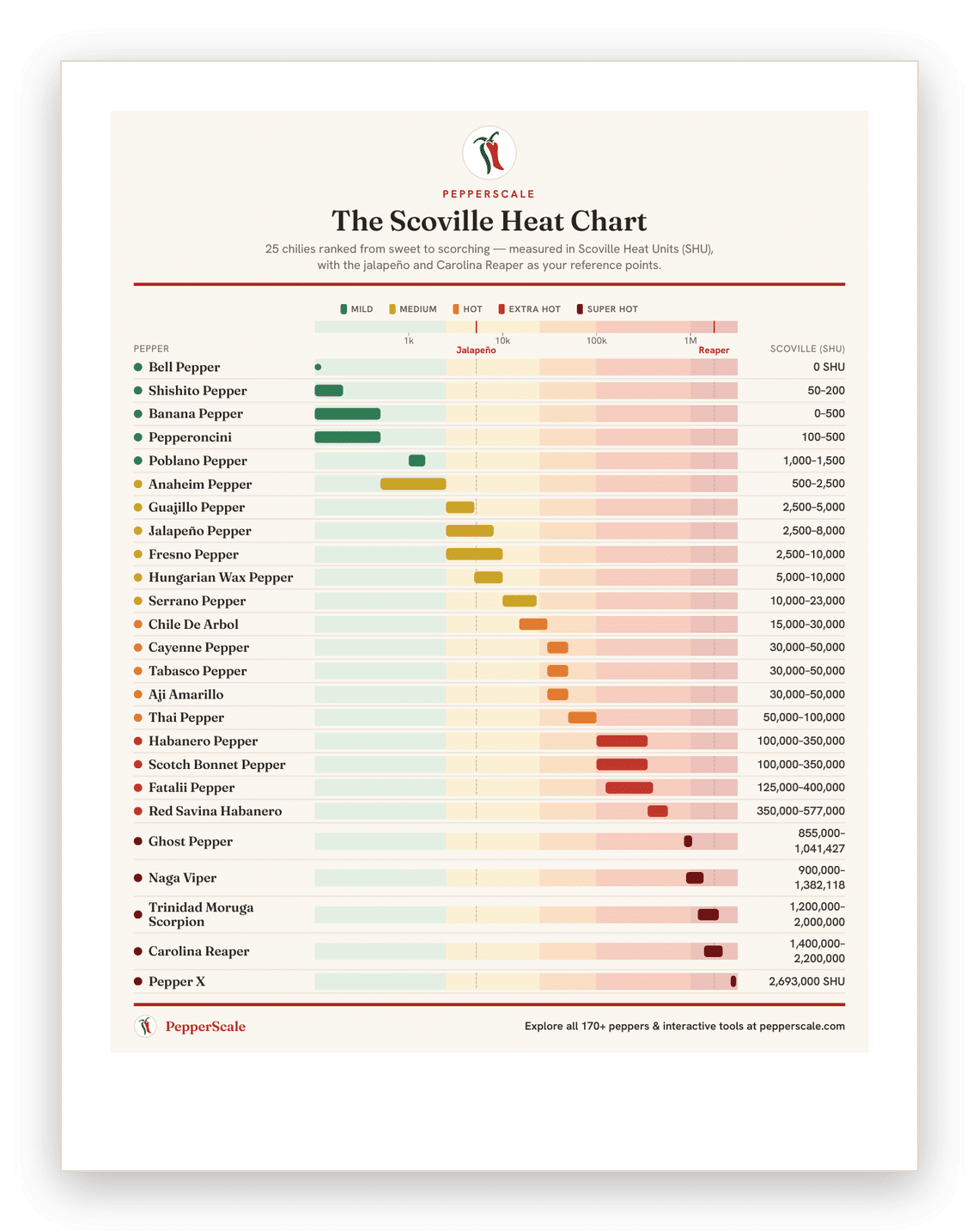
Get the free PepperScale Scoville Heat Chart
A printable, at-a-glance ranking of 25 chilies from sweet to scorching — with the jalapeño and Carolina Reaper as your reference points. Join the newsletter and we’ll send it straight to your inbox.
No spam — just Wicked Wednesday recipes and occasional extra dashes of chili pepper inspiration. Unsubscribe anytime.
Related Reading
- What’s A Good Hoisin Sauce Substitute?: What to use when the jar is empty, or past saving.
- Does Chili Paste Need To Be Refrigerated?: The same question for sambal oelek and other chili pastes.
- Does Sweet Chili Sauce Need to Be Refrigerated?: Another sugary sauce that usually ends up in the fridge door.