The Carolina Reaper is a super-hot chili pepper cultivated by Ed Currie, who runs PuckerButt Pepper Company in Fort Mill, South Carolina. It was recognized by Guinness World Records as the hottest chili pepper in the world from 2013 until 2023, when another extreme chili by Ed Currie, Pepper X, beat it. Our range for it runs from 1,400,000 to 2,200,000 Scoville heat units (SHU); Guinness puts its average at about 1.64 million.
The Carolina Reaper pepper has a bulbous, wrinkled shape, and the scarlet red fruit often ends in a sharp tail, giving it a wicked look. Despite its extreme heat, it has a sweet and fruity flavor, which makes it a popular choice for extreme hot sauces. Always handle this pepper with extreme caution.
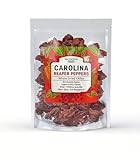
Last update on 2026-11-20. We earn a commission if you make a purchase, at no additional cost to you.

- Species
- C. chinense
- Origin
- United States
- Uses
- Culinary
- Closest swap
- Trinidad Scorpion
How hot is a Carolina Reaper, really?
Eyes rolling to the back of your head hot, that’s how hot. Carolina Reapers range from 1,400,000 Scoville heat units to a blistering 2,200,000. And comparing it to a jalapeño is just silly. Even the hottest jalapeño will come in at around 175 times milder than the mildest Carolina Reaper, and middle to middle, the Reaper comes out about 340 times hotter.
Let’s compare it to another popular super-hot chili, the ghost pepper (Bhut Jolokia). The ghost tips the scales at a median heat of 948,214 SHU, while the median heat of the Carolina Reaper is 1.8 million. So, the Reaper is nearly double the heat of the infamous Bhut. Our Carolina Reaper vs. ghost pepper comparison goes deeper.
This level of heat was unsurpassed for many years. In November 2013, Guinness World Records confirmed the Carolina Reaper as the hottest pepper in the world, with an average of 1,569,300 SHU. It replaced the Trinidad Scorpion “Butch T,” rated at 1,463,700 SHU, though the Trinidad Moruga Scorpion had been named the hottest by New Mexico State University in 2012. How long did it hold on? Nearly a decade, until its super-hot cousin, Pepper X, officially dethroned it in October 2023 at an average of about 2.69 million SHU.
What a Carolina Reaper actually tastes like
In terms of taste, the Carolina Reaper has a sweetness (somewhat fruity) to it. Ed Currie and PuckerButt grow their super-hots with an eye to flavor, not just heat. Guinness described it as fruity and sweet, with a hint of cinnamon and chocolate. Though it’s the heat that’s the obvious star here.
Which flavor family does it belong to? Fruity & Tropical, with the habanero, the ghost pepper and the Moruga Scorpion. In our ratings, fruit comes first and sweetness second, with only a faint floral note.
How to pair a Carolina Reaper
Start with partners that share its fruit. Mango and pineapple are the classics, a tropical pairing you’ll find in plenty of Reaper hot sauces. Honey works the same way, leaning into the pepper’s sweetness while taking a little of the edge off. Dark chocolate is a less obvious match, but its bittersweet side suits the Reaper’s fruit.
What about contrast? Lime’s acidity cuts through the heat and keeps a salsa bright, and tomatoes add a mild sweetness and acidity that can stand up to it. Garlic and onion give the savory backbone, and cilantro’s fresh, slightly citrusy flavor lightens things. For a curry, coconut milk is the creamy cushion. There are more matches for the Reaper in the Chili Pepper Flavor Pairing Tool.

Cooking with Carolina Reapers
First, a warning: this is a scorching chili. Eating it raw is never advised. This is an extreme heat that works better diluted into other ingredients. There are lots of hot pepper daredevils that have recorded their experiences eating this hot pepper raw, so it’s easy to see for yourself. Just look on YouTube.
One of the best use cases for the Carolina Reaper is in hot sauces, where it can add a significant kick, even when diluted. The Reaper’s fruity flavor profile can complement many different types of hot sauces, from tangy vinegar-based ones to those with a sweet or smoky undertone. A few we’ve reviewed: Torchbearer Garlic Reaper, Time’s Up Reaper and Pepper Palace Reaper BBQ Sauce.
Want it in everyday cooking? You can also use it generally to add spiciness to any dish, like you would cayenne pepper. This is common with foods like spicy chilies and salsas. But remember, a little goes a long way with this chili, like all super-hots. No matter if you’re using fresh or ground Reaper, the tiniest pinch can add intense spiciness to a dish. Start modestly with your Carolina Reaper use and increase as needed.
- When cooking with Carolina Reapers, it’s critical to respect this super-hot. Wear gloves when handling. It’s advised to also wear kitchen goggles to protect your eyes and a mask to protect your mouth and throat. Do not treat this hot pepper like a typical medium-heat culinary chili. Even handling it whole and uncut with your bare hands can lead to severe chili burn.
- Get to know how to treat chili burn if it does happen. You’ll want to take immediate action with a chili this hot. Read our post on treating chili burn. As well, learn how to treat chili burn in the eye, as it’s an incredibly sensitive area. Our post on relieving pain from jalapeño pepper in the eye holds true for any chili pepper.
- Remove the membrane from your chili pepper to remove much of its heat. The white pith, the placenta, holds much of the capsaicin in any chili (our guide to pepper anatomy shows where), and its removal makes a noticeable difference. Though, with the Reaper, the heat will still be much hotter than most peppers, so still handle with caution.
- Read our post on cooking peppers and what may make them hotter or milder. There are methods of cooking that can increase or decrease the overall heat of a chili. If you’re cooking with Reapers, you’re an extreme heat fan, so knowing the ins and outs here will keep your pepper as hot as you expect.
How to spot a Carolina Reaper
How do you know one when you see it? The Carolina Reaper has a scorpion-like tail. It’s a red pepper about one and a half to two and a half inches long, depending on who’s measuring. Its shape is bulbous and pockmarked, so this chili looks devilish, fitting of the name.
Red is the classic, but seed sellers also offer yellow and chocolate Reapers. And the tail isn’t unique to it: scorpion peppers share the look. Our scorpion vs. Reaper and Pepper X vs. Carolina Reaper showdowns put them side by side.
Who created the Carolina Reaper?
Smokin’ Ed Currie is the grower of this super hot chili. His PuckerButt Pepper Company, based in South Carolina, developed the Reaper over about ten years. Guinness described it as a cross between a sweet habanero and a Naga Viper, another pepper that was once the hottest in the world. Notably, Smokin’ Ed and PuckerButt are also the cultivators behind Pepper X and the Apollo pepper, the Reaper’s most notable challengers for the throne.
Ed Currie’s pepper-growing career has an amazing back story. He started growing chilies as a hobby more than two decades before the record, and he got serious after learning that capsaicin had potential as a cancer-fighting drug. “My family dies from cancer a lot,” he told NPR’s member station WFAE in 2011. “So I’ve been researching how not to die.” By the time of the record, he’d donated half of a year’s pepper harvest to cancer research.
A fun fact: before it had its fearsome name, the Carolina Reaper went by the code name HP22B. In 2011, Currie was growing 1,400 chili plants at home in Rock Hill, South Carolina. A Winthrop University chemistry professor, Cliff Calloway, was testing his hottest pepper at about 1.5 million SHU on average.
Growing Carolina Reapers
Want to grow your own? The plants get big, up to 5 or 6 feet tall, and Reaper seed is slow to sprout, so start indoors early. The first ripe pods come about 90 days after transplanting. Our Carolina Reaper planting guide covers sowing, spacing, feeding and picking. For dates, plug your zip code into the Pepper Grow Planner.
The best Carolina Reaper substitute
Can’t get a Reaper? Pepper X is hotter still and shares the fruity profile, though it’s hard to find outside a handful of licensed sauces. The Moruga Scorpion is the closest match in heat and flavor, a bit milder at the middle of its range.
Need something tamer? The ghost pepper holds onto the sweet fruit at roughly half the heat, and a habanero keeps the flavor with a fraction of it. Our habanero substitutes guide has more ideas in that range.
The bottom line
The Carolina Reaper held the hottest-pepper title for a decade, and it’s still the super-hot most people know by name. Respect it, dilute it, and you’ll find real fruit and sweetness under the fire. That’s what makes it a hot sauce favorite.
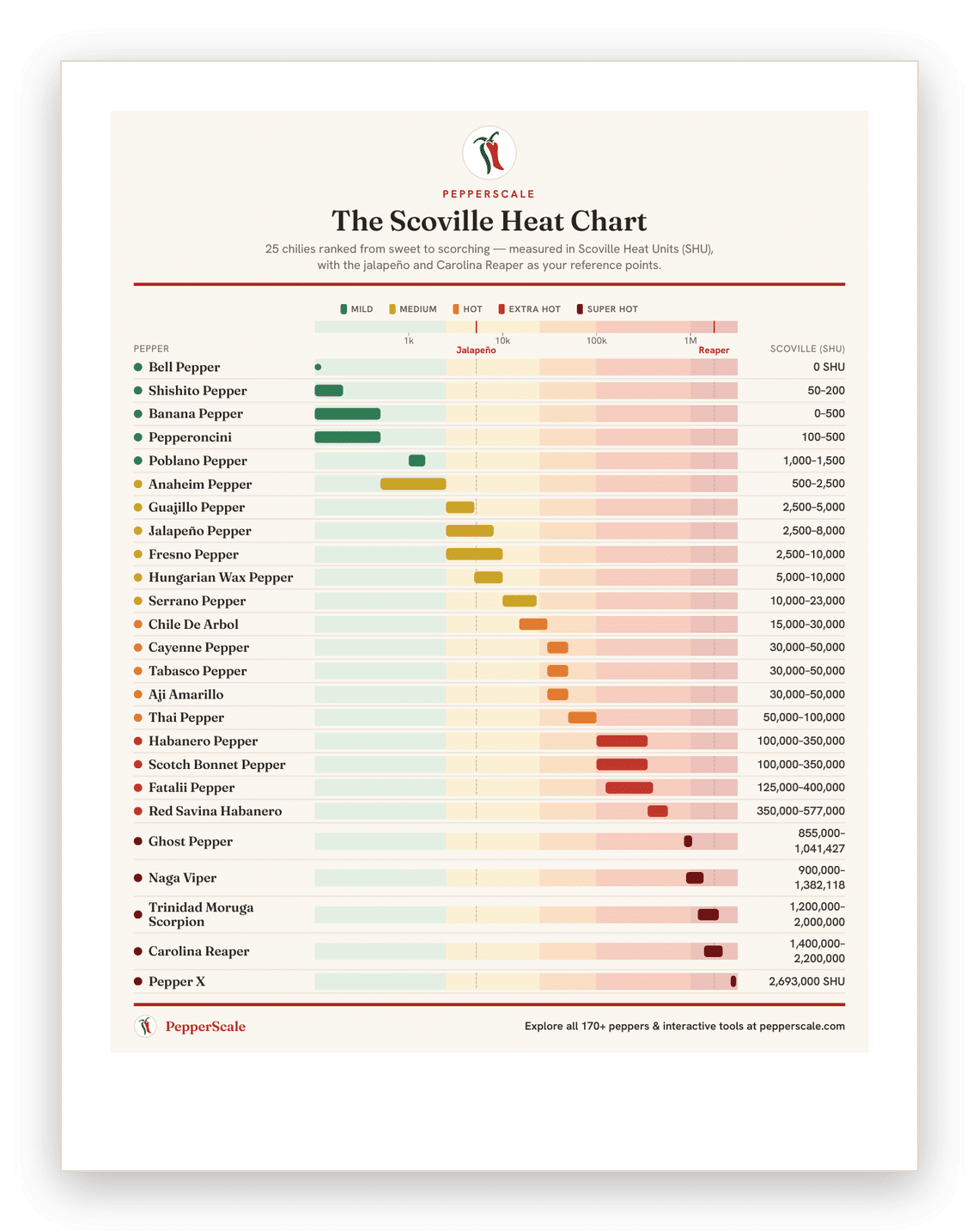
Get the free PepperScale Scoville Heat Chart
A printable, at-a-glance ranking of 25 chilies from sweet to scorching — with the jalapeño and Carolina Reaper as your reference points. Join the newsletter and we’ll send it straight to your inbox.
No spam — just Wicked Wednesday recipes and occasional extra dashes of chili pepper inspiration. Unsubscribe anytime.
Related reading
- Dragon’s Breath Pepper Vs. Carolina Reaper: How the Welsh contender stacks up against the former record holder.
- The Hot Pepper List: Line the Reaper up against more than 175 chilies by heat, flavor or origin.
- Our Hot Sauce Rankings: Find a Reaper sauce, or something gentler, among the 100+ bottles we’ve rated.
Believe it or not Matt, I recently found Carolina Reapers for sale at a local supermarket and decided to see what all the kerfuffle was about. I gingerly (sorry) cut a thin slice and tasted it. Wow! Best chilli I ever ate. Delicious, fruity, sweet but the heat – hottest thing I ever ate. I’ve learned that one quarter of a Reaper is a bit too much to eat on a salad sandwich, one fifth is better. Habaneros are hot but tolerable but I don’t like the taste of habs very much; they all have their purpose though. Reapers make… Read more »